• youtube
  • twitter
  • google plus icon
  • facebook
  • logo linkedin
  • La historia de cómo Perú derrotó al terrorismo

    La historia de cómo Perú derrotó al terrorismo

    Como se menciona en el último artículo de Hernando de Soto, La Disyuntiva Colombiana: Los Terroristas o Sus Ciudadanos, aquí está la historia  de cómo el Perú venció al terrorismo. Descargar PDF. Read More
  • The 2017 Global Award for Entrepreneurship Research goes to Hernando de Soto

    The Global Award for Entrepreneurship Research is the most prominent international award in entrepreneurship research with a price sum of EUR 100,000. De Soto’s analyses have had tremendous influence on policy throughout the world and were a main source of inspiration for the World Bank’s Doing Business program. Read More
  • 2017 Award Winner

    Hernando de Soto Peru  Institute for Liberty and Democracy For developing a new understanding of the institutions that underpin the informal economy as well as the role of property rights and entrepreneurship in converting the informal economy into the formal sector.   Read More
  • Undogmatic thinking

    Q&A with economist Hernando de Soto Polar It is not every day that a world-renowned economist touches down on Lebanese soil,but it should not surprise that such a formidable economist could deliver a presentation less than 24 hours after arriving in Beirut for the first time in his life. It might be expected that he would start with an exercise in affinity, by saying nice Read More
  • "The world’s most important living economist”

    Former US President Bill Clinton has described Hernando de Soto as “the world’s most important living economist.” Mr. de Soto visited Sweden in May 2017 to receive the Global Award for Entrepreneurship Research. In this pod he takes the listeners into the world where he grew up and tells us why he returned to Peru to start his today renowned think tank the Institute for Read More
  • Un Año Nuevo sin conflictos sociales

    Hernando de Soto se reunió con 2,000 dirigentes de los Comités de Autodefensa (CADs) del Perú en Huanta-Ayacucho durante la tercera semana de diciembre. El economista sostuvo que, mientras el terrorismo tiñe de sangre al mundo, en nuestro país vivimos en paz gracias a los CADs, quienes fueron los verdaderos artífices de la derrota del terrorismo en el Perú. De Soto sostuvo que una gran solución a la problemática Read More
  • First Ever Global Blockchain Business Council (GBBC) Launching in Davos

    Formed by The Bitfury Group in collaboration with Covington - Major Launch Event Will Bring Together Global Leaders and Innovators: SAN FRANCISCO, CA – January 4, 2017 – The Bitfury Group, the leading global full-service Blockchain technology company, announced today that in collaboration with international lawfirm Covington, it is launching the first ever Global Blockchain Business Council (GBBC) around the World Economic Forum 2017 Annual Meeting Read More
  • Georgia to Store Real Estate Documents in Blockchain System with Bitfury Group and Hernando de Soto

    The country of Georgia will introduce Blockchain technology in 2017 to enable citizens store and receive real estate extracts according to a report in Caucasus Business Week. Minister of Justice Tea Tsulukiani told the Business Contract. Read More
  • 1
  • 2
  • 3
  • 4
  • 5
  • 6
  • 7
  • 8

The ILD

The Institute for Liberty and Democracy (ILD), led by Peruvian economist Hernando de Soto, works with developing countries to implement property and business rights reforms that provide the legal tools and institutions required for citizens to participate in the formal national and global economy. ILD works toward a world in which all people have equal access to secure rights to their real property and business assets in order to pull themselves—and their countries—out of poverty.

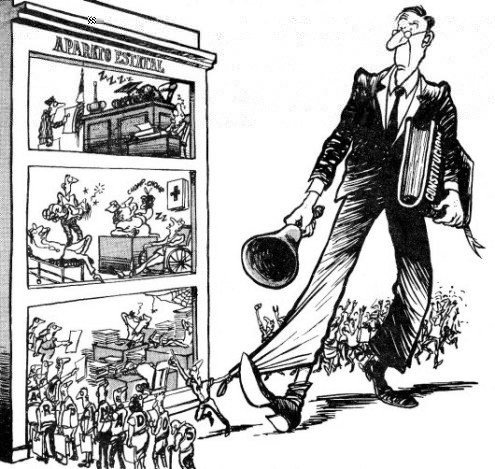
In 1984, to further increase the odds that the real needs of the people would be heard by the government, the ILD mounted a campaign for an independent national “ombudsman” to represent the interests of citizens, no matter how poor they might be. Though there was no provision in the constitution for such a position, it authorized the Attorney General to “defend the public interest.” The ILD petitioned the sitting Attorney General who agreed that he, too, thought that an ombudsman would improve the quality of Peruvian lawmaking. In July 1984 and December 1985, the ILD signed two agreements with the Office of the Attorney General to design the legal mechanisms for Peru’s first “Office of the Ombudsman” —El Defensor del Pueblo.


In February 1986, the ILD launched the first ombudsman project. A special team from the institute set up several offices in downtown Lima to receive and process grievances. During the first month, more than 153 grievances representing 300,000 individuals were received either in person or by mail. More than half of the complaints were about the difficulties of gaining legal access to housing. The ILD’s agenda was now clear: It had to learn why housing had become such a primary concern for so many Peruvians. What precisely did it take, or cost, for an ordinary family to get a piece of real estate?

Using real case histories and simulations, ILD researchers discovered that existing government procedures to allot undeveloped land involved 207 bureaucratic steps that could take upwards of 3 years to complete; gaining a legal property title might take as long as 20 years! Suddenly, the reason became quite clear for the number of housing complaints —and why there had been 282 violent land invasions in Peru in 1985 alone. The majority of Peruvians did not have legal access to land, leaving them no alternative but to squat on private and public lands.

ILD proceeded to draft eight proposals for reforming the legal property system and addressing other bureaucratic hurdles that alienated the poor from the law, including the formalization of property, access to public information, administrative simplification, and arbitration, which it turned over to the Office of the Ombudsman. Once again, however, when faced with a concrete proposal, the government resisted change. A new Attorney General had also taken office, and since the Attorney General was then part of the executive branch, he was pressured to drop the proposed reforms. The ombudsman was in place but politically stymied. The ILD was then forced to discontinue its relationship with the Attorney General.

But, once again, a failure had its silver linings: Poor people had tasted the benefits of having government listening to them directly, and the Government would be hard-pressed to persuade them otherwise; for the ILD’s part, it had discovered beyond a doubt that property was an important issue for most of the people of Peru, demanding further study. In addition, the ILD’s hard work of setting the ombudsman concept into motion turned out not to be in vain: Peru’s New Constitution of 1993 incorporated the Office of the Ombudsman —as an autonomous entity no longer part of the Attorney General’s office, just as the ILD had originally proposed and kept pushing for until that very date.

Contact Us
P.O. Box 18-1420  
(511) 222-5566